)

)
)
)
)
)
)
)
)

)
)
)
)
)
)
)
)
)

)

)

)
)

)


)

)
)
)
)
)
)
)
)
)
)
)
)


3 AI Workflows Transforming Startup Marketing Ops
)
AI in marketing is no longer about hype—it’s about execution.
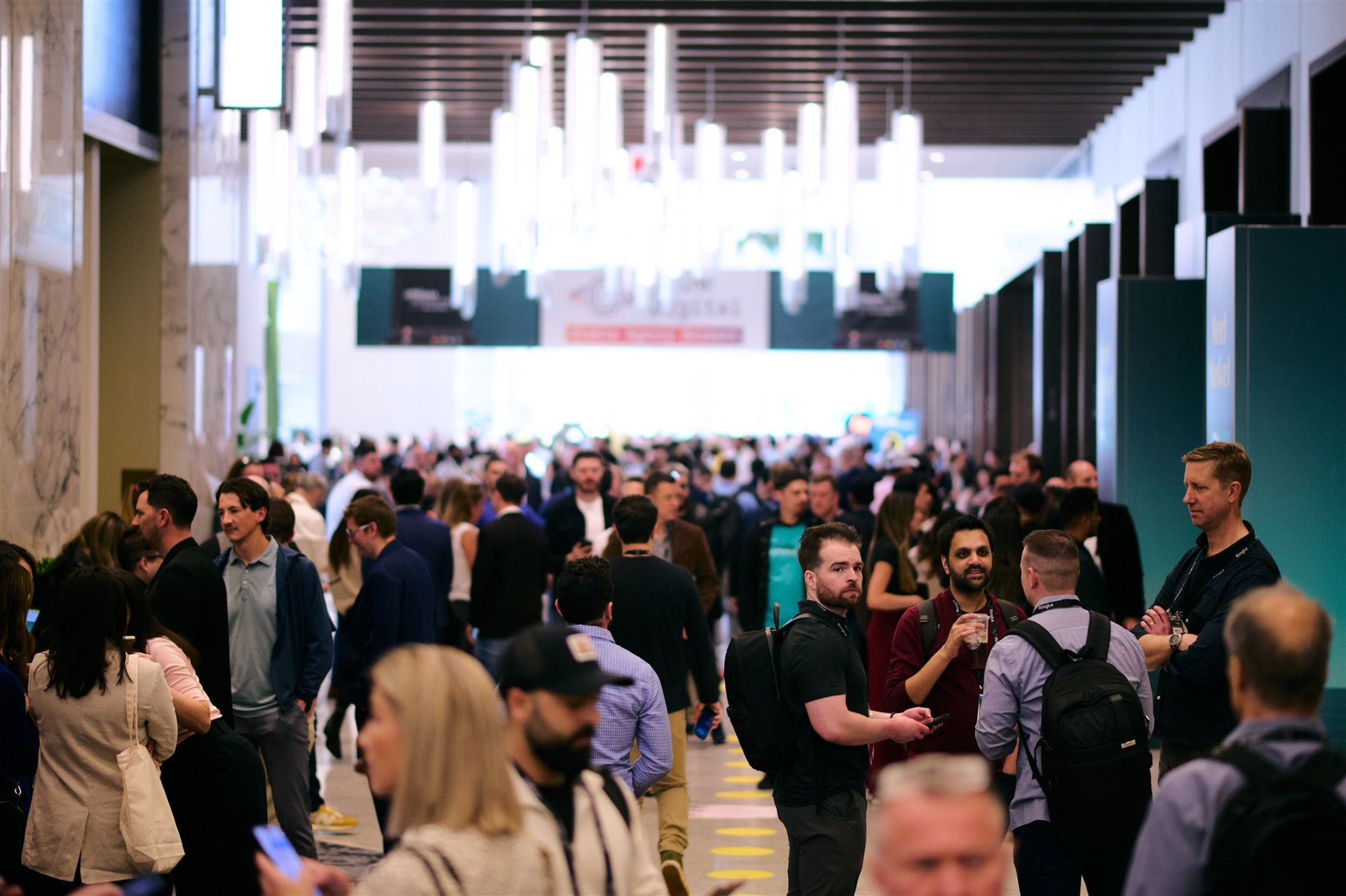
At Affiliate Summit, one of the most practical sessions cut through the noise to show how startups and lean marketing teams can actually use AI to scale operations, improve performance, and move faster without increasing headcount. The session, led by AI consultant Jo Lamborjeeva, focused on three high-impact AI marketing workflows that are already helping brands operate smarter, faster, and more efficiently.
The core message was simple: AI shouldn’t replace marketers—it should make them superhuman.
Why AI Is a Game-Changer for Startup Marketing Teams
For startups and small marketing teams, growth has traditionally been limited by time, resources, and access to data. AI is rapidly removing those barriers.
With the right workflows in place, teams can now:
- Execute faster marketing research and strategy development
- Produce high-quality creative assets at scale
- Analyse performance data without dedicated analysts
This shift is turning AI into a growth equaliser, allowing smaller brands to compete with larger, better-resourced competitors.
However, the real advantage doesn’t come from tools alone—it comes from how those tools are applied in day-to-day marketing operations.
Workflow 1: AI-Powered Marketing Strategy and Research
One of the most time-consuming parts of any marketing campaign is upfront research. Understanding your audience, analysing competitors, and building a media plan can take days—or even weeks.
AI tools are now dramatically reducing that workload.
By using agentic AI platforms, marketers can input a campaign brief and generate:
- Detailed audience insights and behaviours
- Content consumption patterns and channel preferences
- Competitive landscape analysis
- Suggested media plans and budget allocation
Instead of starting from scratch, teams can begin with a fully formed strategic foundation and refine it. This approach not only speeds up execution but also allows marketers to focus on higher-value thinking rather than manual research.
Importantly, while AI can accelerate the process, human oversight remains critical. Outputs should be validated, refined, and adapted to ensure accuracy and relevance.
Workflow 2: AI for Creative Production and Ad Generation
Creative production has historically been another bottleneck for marketing teams, particularly when budgets are limited. AI is now enabling brands to produce high-quality ad creatives, product imagery, and video content at scale.
With the right tools, marketers can transform basic product images into polished, campaign-ready assets. AI image generation and editing platforms allow teams to enhance visuals, create new variations, and test different creative directions without the need for extensive design resources.
This extends into video as well. AI can:
- Animate static images into short-form video content
- Repurpose long-form content into bite-sized clips
- Generate variations of ads for testing across platforms
For performance marketers, this opens up new opportunities for rapid experimentation. Instead of relying on a small set of creatives, teams can continuously iterate and optimise based on performance data.
However, the session also highlighted an important consideration: AI works best when paired with human creativity. Designers, marketers, and content creators still play a vital role in guiding outputs, refining visuals, and ensuring brand consistency.
AI and Competitor Analysis: A New Creative Advantage
Beyond content creation, AI is also transforming how marketers approach competitive analysis.
Modern AI tools can analyse competitor campaigns at scale, identifying:
- Top-performing ad formats and messaging angles
- Creative trends across platforms like Meta and TikTok
- Traffic strategies and channel distribution
Marketers can then use these insights not to copy competitors, but to inform their own creative strategy. By understanding what resonates in the market, teams can develop stronger, more informed campaigns while maintaining originality.
This kind of AI-driven insight gives startups a significant edge, particularly in crowded and competitive industries.
Workflow 3: AI for Marketing Data Analysis and Decision-Making
Data analysis is often one of the most underutilised areas in startup marketing—not because data isn’t available, but because teams lack the time or expertise to interpret it effectively.
AI is changing that.
By uploading campaign data into advanced AI tools, marketers can quickly generate:
- Performance summaries and trend analysis
- Campaign diagnostics and optimisation recommendations
- Visual dashboards that highlight key metrics
Instead of manually reviewing spreadsheets, teams can access clear, actionable insights in seconds. This allows for faster decision-making and more agile campaign optimisation.
AI can also help prioritise actions, identifying which campaigns to scale, optimise, or pause based on performance data. For lean teams, this kind of efficiency is invaluable.
The Importance of Human-Led AI Implementation
A recurring theme throughout the session was the importance of keeping AI human-centred.
While automation can significantly improve efficiency, it should not replace strategic thinking or creativity. The most effective approach is to use AI as a collaborative tool—one that enhances human capabilities rather than eliminating them.
This is particularly important when it comes to brand trust. Over-reliance on AI-generated content, especially in areas like user-generated content (UGC), can risk authenticity if not handled carefully. Audiences are becoming more aware of AI, and brands must strike the right balance between efficiency and credibility.
AI as the Future of Scalable Marketing Operations
The three workflows presented—strategy, creative, and analysis—highlight a broader shift in how marketing teams operate.
AI is enabling a new model of scalable marketing operations, where smaller teams can achieve more with fewer resources. By integrating AI into everyday processes, brands can move faster, test more ideas, and respond to market changes in real time.
For affiliate marketers, e-commerce brands, and startups, this represents a significant competitive advantage. Those who adopt practical, workflow-driven approaches to AI will be better positioned to grow efficiently and sustainably.
Final Thoughts
AI in marketing is evolving rapidly, but the fundamentals remain the same. Success still depends on understanding your audience, creating compelling content, and making data-driven decisions.
What’s changed is the speed and scale at which these things can now be done.
By embracing AI workflows that are practical, human-led, and results-focused, marketing teams can unlock new levels of productivity and performance—without losing the creativity and strategic thinking that drive real growth.
Want to hear insights like this and more? Affiliate Summit East 2026 is BACK in NYC July 27 – 28... Register your space here today!