)

)
)
)
)
)
)
)
)

)
)
)
)
)
)
)
)
)
)

)

)
)

)

)
)
)
)
)
)
)
)
)
)
)
)
)



The State of AI and SEO in 2026 with Lily Ray
)
Interested in hearing more about the state of AI and SEO in 2026? Join us at Affiliate Summit East 2026, heading to NYC this July 27 – 28... Register your space here today!
At Affiliate Summit West 2026, Lily Ray, VP of SEO Strategy & Research at Amsive, delivered a keynote that made one thing clear: Search has evolved into answer.
We’re no longer optimizing for 10 blue links. We’re optimizing for AI-generated answers, agentic commerce, and brand visibility across large language models (LLMs). Here’s your complete breakdown of The State of Search and AI in 2026 — and what affiliate marketers, publishers, and brands must do next.
Search Has Evolved Into Answer
- Search engines are rapidly evolving into answer engines that synthesize and generate responses instead of simply returning lists of links.
- Over the past decade, Google has shifted from keyword matching to deep intent and entity understanding through updates like Hummingbird, RankBrain, BERT, and MUM.
- The transformer architecture, which powers modern AI systems like ChatGPT and Gemini, fundamentally changed how machines understand language and context.
- Today’s AI-powered search experiences reduce friction for users by delivering summarized answers directly within the interface.
ChatGPT’s Explosive Growth Triggered a Competitive Shift
- ChatGPT became the fastest-growing startup in history, reaching 100 million users in just two months.
- The platform now processes billions of prompts per day, and the majority of Fortune 500 companies use it.
- Google publicly declared a “Code Red” in response to ChatGPT’s rapid adoption and competitive threat.
Despite ChatGPT’s growth, Google Search usage has remained stable and in some cases has increased year over year. Approximately 95% of ChatGPT users continue to use Google alongside AI tools, meaning search engines and LLMs currently coexist rather than replace one another.
Google’s AI Expansion Is Reshaping the SERP
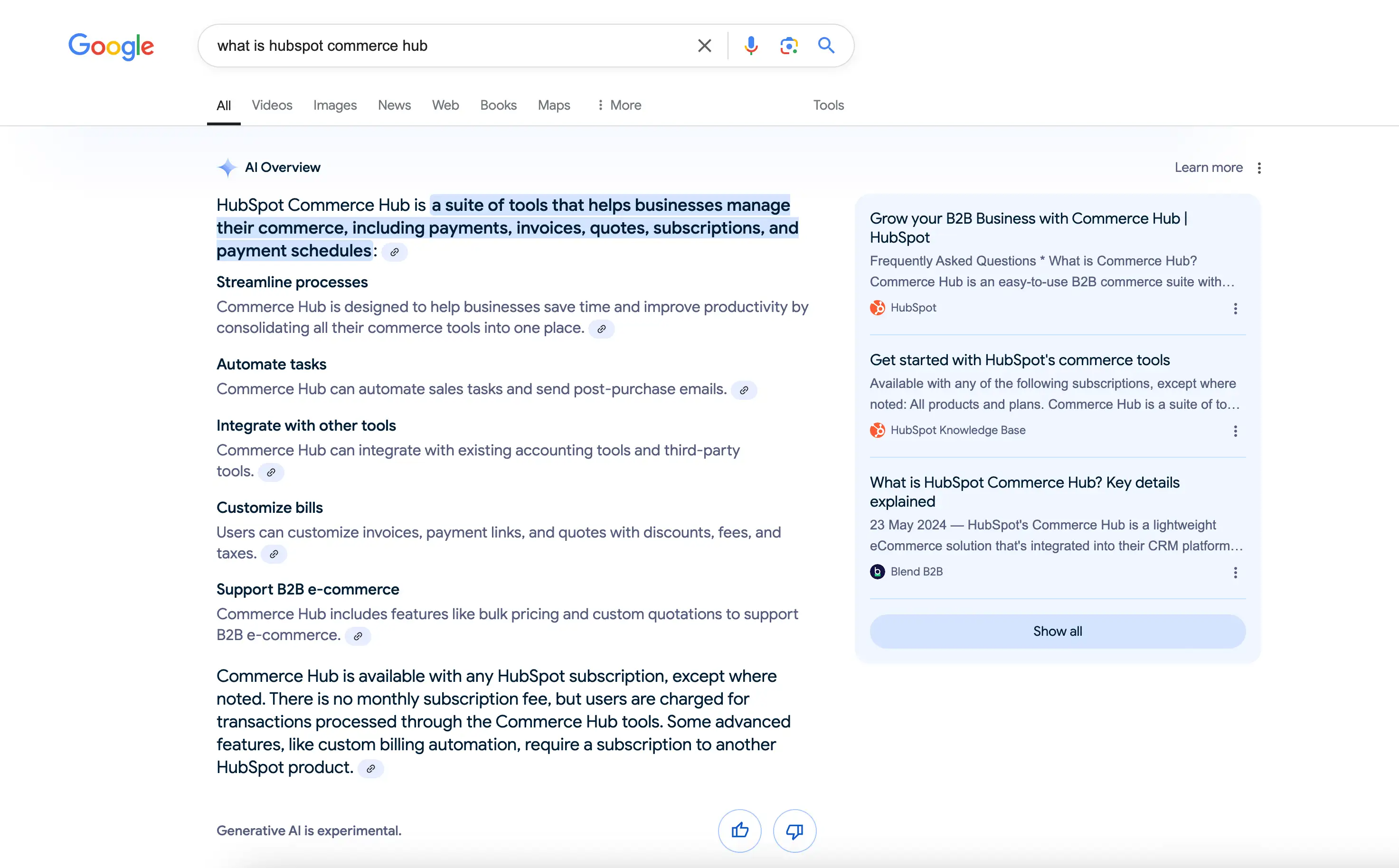
- Google AI Overviews now appear in a significant percentage of search queries and are available across more than 200 countries and 40 languages.
- AI Overviews are expanding beyond informational searches to include navigational, commercial, and transactional queries.
- Google reports that AI Overviews are increasing overall search volume by encouraging more conversational and follow-up queries.
- Google AI Mode allows users to interact conversationally with a large language model directly inside Search.
- AI Mode has grown rapidly but results in a high percentage of zero-click searches because users often get answers without visiting external websites.
- Google Web Guide blends AI-generated summaries with traditional organic listings and is viewed by many experts as a more monetizable long-term search format.
AI Commerce Is Reducing the Need for Clicks
- OpenAI and Google are both introducing commerce protocols that allow transactions to happen directly inside AI interfaces.
- These systems enable instant checkout and agentic purchasing without requiring users to visit a merchant’s website.
As a result, affiliate marketers must prepare for a world where influence and brand inclusion matter more than raw traffic volume.
AEO vs GEO vs LLMO: What Actually Matters?
Whether you call it:
- AEO (Answer Engine Optimization)
- GEO (Generative Engine Optimization)
- LLMO (Large Language Model Optimization)
The goal is the same: "Optimize for visibility, citation, and brand presence across AI platforms."
The core shift is moving from ranking-based metrics to visibility-based metrics across AI platforms, as brands must now measure how frequently they are cited or mentioned in AI-generated answers.
- Share of voice across large language models has become a key competitive metric.
- Brand sentiment inside AI-generated responses must also be monitored because tone and positioning directly influence purchasing behavior.
AI search is personalized - meaning two users may receive different answers for the same prompt. Basically, persona-based tracking is now essential.
Traditional SEO Still Powers AI Visibility
- Large language models frequently use retrieval-augmented generation (RAG), which pulls information from live search results when up-to-date data is needed.
- Ranking well in traditional organic search increases the likelihood of being cited inside AI-generated responses.
- Strong technical SEO, structured content, and authoritative signals remain foundational to visibility in AI search.
= If you rank well in Google, you increase your likelihood of being cited by AI. Strong SEO is still the foundation of AEO.
Third-Party Mentions Matter More Than Ever
- AI systems rely heavily on trusted third-party sources to validate brand credibility.
- Product review sites, affiliate publishers, and reputable publications are commonly cited in AI responses.
- Platforms like Reddit, Wikipedia, YouTube, and Facebook are frequently referenced in AI-generated answers.
- Public relations efforts and digital reputation management now directly influence AI visibility.
"Backlinks are still important - but now the question is: What is the internet saying about your brand? PR, digital reputation, and social conversation monitoring have never mattered more."
Multimodal Content Is Essential for AI Visibility
- Modern AI systems understand and interpret text, video, images, and audio content.
- Brands should publish across: blogs, YouTube, short-form video platforms, podcasts, and social media to maximize citation opportunities.
- Repurposing research into multiple formats increases the number of surfaces AI systems can reference.
- Cross-platform amplification significantly improves discoverability within AI-generated answers.
Publishers Must Decide How to Handle AI Crawlers
- Publishers can block AI crawlers through robots.txt or prevent snippet inclusion through meta tags.
- Many publishers are exploring licensing agreements and data partnerships with AI companies to monetize their content usage.
- Companies like Cloudflare now offer AI crawl control and pay-per-crawl marketplaces to help publishers manage AI access.
But remember, blocking AI entirely means: you remove yourself from the consideration set.
Affiliate Monetization Models Are Evolving
- Affiliates may explore fixed-fee placements for high-value review pages that are frequently cited by AI systems.
- Pay-per-citation models may emerge where publishers are compensated when AI models reference their content.
- Review and comparison pages carry increased bargaining power because AI models frequently cite best-product roundups.
- Transparency and clear disclosures remain critical when implementing pay-to-play structures.
Google’s Reviews Standards Are Raising the Bar
- Google’s integrated Reviews Update prioritizes first-person experience and demonstrated expertise.
- Affiliate content that includes original photography, testing videos, and disclosed methodologies is more likely to perform well.
- Expert reviewers and credentialed contributors strengthen both traditional SEO and AI visibility.
- Generic AI-generated listicles without firsthand insight are increasingly less competitive.
The Apple and Google Partnership Will Accelerate AI Adoption

"The Gemini x Siri integration gives Google access to 2+ billion active apple devices. This dramatically shifts the AI distribution landscape and intensifies competition with OpenAI. You can expect Gemini adoption to surge in 2026".
Key Takeaways for Affiliates in 2026
- Google is not dead. AI Overviews make it the largest AI answer surface.
- Clicks will decline. Brand visibility becomes the new KPI.
- SEO still powers AI. Ranking influences RAG citations.
- Third-party reputation is critical. AI trusts corroboration.
- Multimodal content wins. YouTube and social are heavily cited.
- Monetization models must evolve. Influence > traffic.
- First-person reviews matter more than ever.
The Big Question: How Do You Win Without Clicks?
In a world where AI delivers instant answers and keeps users inside its interface:
- How do you define success?
- How do you future-proof revenue?
- What’s your human-centric competitive advantage?
The brands and affiliates that thrive in 2026 will be those who:
- Build recognizable, trusted brands
- Earn widespread third-party mentions
- Invest in PR and community visibility
- Diversify revenue models
- Treat AEO as an evolution of SEO — not a replacement
The era of answer engines is here. If you want your brand recommended, cited, and trusted inside AI search results — NOW is the time to adapt.
Want to hear insights like this and more? Affiliate Summit East 2026 is BACK in NYC July 27 – 28... Register your space here today!